


3D Printed Parts
3D printed parts have become an important part of modern manufacturing because they offer flexibility, speed, and design freedom that traditional production methods often cannot match. These parts are created through additive manufacturing, a process in which material is built layer by layer according to a digital model. This approach allows designers and engineers to produce highly customized components with complex shapes, internal structures, and precise details.One of the main advantages of 3D printed parts is the ability to move from concept to finished product very quickly. Instead of waiting for molds, tooling, or long production setups, a digital file can be adjusted and printed in a short time. This makes 3D printing especially useful for prototyping, product testing, and small-batch production. Designers can evaluate form, fit, and function early in the development process, reducing errors and saving time.3D printed parts are used in many industries. In aerospace, they help create lightweight components that can reduce fuel use and improve efficiency. In automotive applications, they are often used for custom fixtures, jigs, test parts, and even functional end-use components. In healthcare, 3D printing can produce patient-specific items such as prosthetics, dental models, surgical guides, and medical devices. Consumer products, industrial equipment, architecture, and education also benefit from this technology.Another major benefit is customization. Because each part is produced from a digital design, it is easy to modify dimensions, features, or performance characteristics without changing expensive tooling. This makes 3D printing ideal for one-of-a-kind parts, replacement components, and highly specialized applications. It also supports innovation by making it easier to experiment with new geometries and ideas.The choice of material is also an important factor in 3D printed parts. Depending on the printing method, parts can be made from plastics, resins, metals, ceramics, or composite materials. Each material offers different properties such as strength, heat resistance, flexibility, or surface finish. This allows users to select the best material for the intended use, whether the goal is visual presentation, mechanical performance, or durability.Although 3D printing offers many advantages, it also has limitations. Some parts may require post-processing to improve strength, accuracy, or appearance. Build size, production speed, and material cost can also affect the final result. However, as technology continues to improve, these challenges are gradually being reduced.Overall, 3D printed parts represent a powerful and versatile solution for modern design and production. They support creativity, efficiency, and customization while opening new possibilities across many fields.
Products
Category:
-
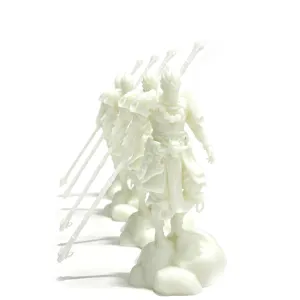
Industrial 3D Printed Functional Prototype
Category: 3D-Printed PartsBrowse number: 63Number:Release time: 2026-06-17 16:56:24As industries continue to accelerate product development cycles, companies require manufacturing methods that can quickly transform digital designs into physical parts. Industrial 3D printing enables engineers to evaluate product functionality, optimize structures, validate assembly compatibility, and identify design improvements before committing to expensive tooling investments.
News
Category:
No search results found!
Case
Category:
No search results found!
Video
Category:
No search results found!
Download
Category:
No search results found!
Job
Category:
No search results found!
Featured Products
No search results found!




 Phone
Phone