


Vacuum Cast Aluminum Parts
Vacuum Cast Aluminum Parts are precision-engineered metal components produced through a specialized casting process that uses reduced air pressure to improve quality, density, and surface finish. This method is widely valued in industries that require lightweight, durable, and accurate aluminum parts with excellent mechanical properties. Compared with conventional casting methods, vacuum casting helps minimize air entrapment, porosity, and oxidation, resulting in parts that are stronger, more reliable, and easier to machine or finish.The production process begins with melting high-quality aluminum alloy in a controlled environment. Before the molten metal is poured into the mold, air is evacuated from the cavity to create a vacuum. This negative pressure allows the aluminum to flow smoothly and fill even the most intricate sections of the mold. As a result, vacuum cast aluminum parts often feature sharp details, thin walls, and consistent dimensions. This is especially important for applications where precision and repeatability are critical.One of the main advantages of vacuum cast aluminum parts is their excellent structural integrity. Because the vacuum environment reduces trapped gases, the final components typically have fewer internal defects and a more uniform composition. This leads to improved strength, better fatigue resistance, and enhanced performance under demanding operating conditions. In addition, aluminum’s natural properties, such as low weight, corrosion resistance, and good thermal conductivity, make it an ideal material for many technical applications.Vacuum cast aluminum parts are used in a wide range of industries, including automotive, aerospace, electronics, machinery, robotics, and consumer products. In automotive applications, they may be used for housings, brackets, engine components, and structural elements where weight reduction and durability are essential. In electronics, they are commonly used for heat sinks, enclosures, and precision frames because aluminum dissipates heat efficiently. Aerospace and industrial equipment manufacturers also rely on vacuum cast aluminum parts for components that must meet strict performance and reliability standards.Another important benefit of this manufacturing method is design flexibility. Vacuum casting supports complex geometries that might be difficult or expensive to produce using other processes. Engineers can design parts with integrated features, reducing the need for additional assembly steps. This can lower production costs, improve consistency, and shorten lead times. After casting, the parts can undergo secondary operations such as machining, anodizing, polishing, or coating to meet specific functional and aesthetic requirements.Quality control is a key part of producing vacuum cast aluminum parts. Each component must be carefully inspected for dimensional accuracy, surface quality, and internal soundness. Advanced testing methods such as X-ray inspection, pressure testing, and coordinate measurement are often used to ensure that the parts meet industry standards. By maintaining strict process control, manufacturers can deliver components that perform reliably in critical applications.In summary, vacuum cast aluminum parts combine the advantages of advanced casting technology and the performance benefits of aluminum. They offer high precision, low porosity, good strength, and excellent surface quality, making them suitable for a broad range of demanding applications. Their versatility, lightweight nature, and durability continue to make them an important choice in modern manufacturing.
Products
Category:
-
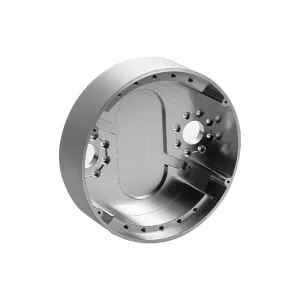
Vacuum Cast Aluminum Sealed Chamber Housing
Category: Vacuum-Cast PartsBrowse number: 34Number:Release time: 2026-06-17 16:36:43Modern industrial systems increasingly require enclosure components capable of maintaining stable internal environments while supporting mechanical loads and integrated assemblies. In applications such as vacuum equipment, semiconductor processing systems, automated machinery, aerospace devices, and testing instruments, chamber housings serve as critical structural elements that directly influence system performance, reliability, and operational safety.
News
Category:
No search results found!
Case
Category:
No search results found!
Video
Category:
No search results found!
Download
Category:
No search results found!
Job
Category:
No search results found!
Featured Products
No search results found!




 Phone
Phone