


Vacuum Chamber Housing
A vacuum chamber housing is a carefully engineered enclosure designed to create and maintain a controlled low-pressure environment for a wide range of scientific, industrial, and manufacturing applications. It serves as the structural body of a vacuum chamber, providing the mechanical strength, sealing performance, and dimensional stability needed to support vacuum operations under demanding conditions. Because the internal pressure is much lower than atmospheric pressure, the housing must be built with high precision and strong materials to resist deformation, leakage, and contamination.In most cases, a vacuum chamber housing is made from materials such as stainless steel, aluminum, or other corrosion-resistant metals. Stainless steel is often preferred for its durability, low outgassing characteristics, and compatibility with clean environments. Aluminum may be selected when a lighter structure is required, especially in systems where weight reduction and thermal conductivity are important. The choice of material depends on the intended application, operating temperature, required vacuum level, and exposure to chemicals or reactive gases.The design of the housing typically includes ports, flanges, view windows, feedthrough openings, pumping connections, and access points for instruments or process equipment. These features allow users to introduce samples, monitor internal conditions, and integrate pumps, sensors, heaters, or electrical components. To preserve vacuum integrity, all interfaces must be carefully sealed using O-rings, metal gaskets, or other high-performance sealing solutions. Surface finish and machining accuracy are also critical, since even minor imperfections can cause leaks or trap contaminants that compromise performance.A vacuum chamber housing is used in many fields, including semiconductor production, materials testing, coating deposition, aerospace research, leak testing, electron microscopy, and thermal processing. In these environments, stable vacuum conditions are essential for achieving accurate results, protecting sensitive components, and improving product quality. The housing not only contains the vacuum but also helps manage heat transfer, particle contamination, and mechanical stress during operation.Modern vacuum chamber housings are often customized to meet specific process requirements. Some are compact and simple, while others are large, complex assemblies with multiple chambers or modular extensions. Engineers may incorporate reinforced walls, precision welds, internal supports, and specialized coatings to enhance performance and durability. In high-purity applications, the housing is designed to minimize gas absorption and particle generation, making it suitable for ultra-high vacuum systems.Overall, a vacuum chamber housing is a fundamental component that determines the reliability and effectiveness of a vacuum system. Its strength, sealing quality, material selection, and design precision all play important roles in enabling consistent and efficient operation across a broad range of advanced technologies.
Products
Category:
-
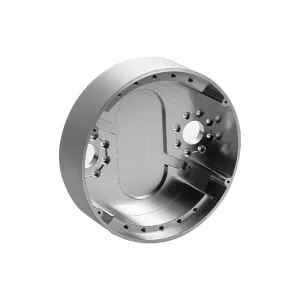
Vacuum Cast Aluminum Sealed Chamber Housing
Category: Vacuum-Cast PartsBrowse number: 34Number:Release time: 2026-06-17 16:36:43Modern industrial systems increasingly require enclosure components capable of maintaining stable internal environments while supporting mechanical loads and integrated assemblies. In applications such as vacuum equipment, semiconductor processing systems, automated machinery, aerospace devices, and testing instruments, chamber housings serve as critical structural elements that directly influence system performance, reliability, and operational safety.
News
Category:
No search results found!
Case
Category:
No search results found!
Video
Category:
No search results found!
Download
Category:
No search results found!
Job
Category:
No search results found!
Featured Products
No search results found!




 Phone
Phone